Showing posts with label History. Show all posts

Saturday, July 9, 2011

Thursday's Accomplishment

One of the individuals I work with is a tall young man who is a few states away from home. I don't mean that he is living abroad, but rather that he's in spirit, a Californian who was born in the wrong place. He wears shorts and a t-shirt year round, loves hot weather, hates rain and the cold, and is covered in enough accessories made from hemp to open a boutique. He's also, at the age of twenty two, a fanatical Libritarian. I make mention of his age because, initially, I was surprised to find that he was one, with me holding the mistaken belief that it was for outraged, middle aged conservatives who didn't want to pay taxes. As I've come to know him better I've realized this is simply another angle of the youth waving his banner in the air screaming, 'fuck the establishment!' Of course he doesn't want to pay taxes either so I guess that's universal to the Libritarian cause.

Often times at work I'll punch out but I wont be quite ready to leave. I'll want to use the considerable computer hardware available to draw, play games or surf the internet, and it just so happened on Thursday I did just that. I don't recall how the conversation got started, though We had been listening to www.radiolab.org all last week and there had been a variety of impromptu discussions on the topics. This whole event probably sprang from that.

That event being the Libritarian and myself debating the nature of influence and where it comes from and how much it effects us every day. He obviously took the view that he was cut from whole cloth, that all of the things he enjoys, everything he dislikes, all of his ideas and every last shred of his personality, is 100% his own and his decision. Nothing has ever influenced him to do anything ever.

There's just something about a rickety construction, wobbling back and forth in strong wind that just makes you want to give it a good push and see how hard it will come down.

I obviously took a different view, that we are influenced all the time, not only by the media we ingest and the families who raised us, but by elements of society itself that have been here since the first settlers landed. This of course didnt set well with my co-worker so I had to walk him through the idea.

Ours is a nation of dualities that began when the puritans, who were simply too uptight for Great Britain, sailed for the New World. These were people who viewed life as a black tie affair. Everything had to be proper, everything had to be observant. The enjoyment of life was no where on the program. It is from the Puritans that we get our need to AVOID BEING DIFFERENT FROM THE GROUP.

Those who followed the Puritans were a motley assortment of entrepreneurs, outcasts, malcontents, explorers and criminals. It was from these brave souls that we pull our 'Great American Spirit,' that drive to stand out, to stake a claim, to be recognized, and above all else, BE YOUR OWN PERSON.

These are the competing concepts that make us the Americans we are everyday. The war between group acceptance and purest individuality. It isn't until you really stop and consider why you are the way you are, what you're interests are and more importantly why you lean toward or away from the things you do, that you really start to realize how little of yourself is actually yours and yours alone.

We spent nearly forty minutes, the Libritarian and I, going back and forth on these concepts. He reacted much like I did when my mentor first proposed this idea to me. 'No,' he railed, 'everything is my choice and I made it, no one told me to like the things I do!' But slowly and surely, as the evidence mounted, he realized the truth. I didnt point out that his total sublimation to a political party is the most damning evidence of his influences, but I figured baby steps. We would start with his taste in fashion and other interests before completely pushing over the framework of his life. When the heap of timber went down though it was a sight to behold. His shoulders slumped, the air left him, and all he could say is, 'Damn, you're right."

That's when I threw him a life line.

'Now that you know you can be influenced, you can finally start to see where they are, where they come from. Now you can truly be the individual you want to be and choose how you let yourself be influenced in the future.' He seemed genuinely excited at that prospect.

I didn't tell him that it would take a life time of vigilance. I'll let him reason that out. Hopefully he will.

After the conversation I was elated. I had begun to carry on my mentor's work, in just the way she said it was to be done. One person at a time. It's all we can do.

Also, my mentor is dead. She died last year. I might be able to talk more about it in a month or two... We'll see.

Wednesday, April 29, 2009

The Mythological Truth

When I was in college one of my classes presented me with what I found to be an amazing concept. What is Myth? Mythology? A quick trip over to urbandictionary.com tells us that it's "A story about mystical beings, powers or events otherwise impossible to perform in reality that only exist in imagination." That's good enough for my purposes. Point is most people believe that the word Myth automatically equates to fairy tales and fantasy, but actually it doesn't. The real definition (according to the American Heritage Dictionary) is as follows "A traditional, typically ancient story dealing with supernatural beings, ancestors, or heroes that serves as a fundamental type in the worldview of a people, as by explaining aspects of the natural world or delineating the psychology, customs, or ideals of society: the myth of Eros and Psyche; a creation myth." There's a particular part of that statement that I'm going to point to, specifically "...serves as a fundamental type in the worldview of a people, as by explaining aspects of the natural world..."

I wouldn't be surprised if you don't see where I'm going with this immediately, which is OK. This is a back-ass-wards concept I'm throwing out here I admit. It's one of the weirder ideas I've mulled over, but what that second definition is saying is Myth isn't fantasy, it's HISTORY. Sure it's not necessarily history written on pure fact or science, but who's history ever is? The books are written by victors, apologists, separatists, patriots, etc. They're written by human beings. The Holocaust was a terrible event but in some countries it simply never happened! That's how mailable events can be from place to place. In one country, six million people never died. Perspective truth is a powerful thing. So if truth is subjective based on the place, it's certainly subjective based on time. It's interesting how the further we accelerate away from the origin point of an event it can simultaneously become muddier and clearer. Rumor, exaggeration and the human foible of forgetfulness obscures the truth, even as modern explorations into the past reveal it anew and with greater clarity then ever. As a result we ('we' being everyone who is 'not currently engaged in the pursuit of history') accept our view of history as 'truth'. What other choice do individuals have? Sane choice mind you. We live our lives as best we can and generally cannot be bothered to investigate the past with vigor. Instead we simply have to accept the 'truth' as it comes to us.

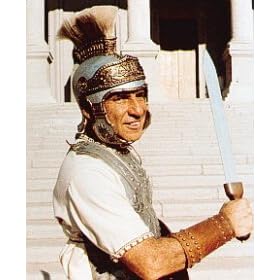
With that much in mind our history is as correct as we're willing to accept it has to be, so long as it something doesn't come to light that severely alters our world view. In short, we believe the past to be true. Great, how wonderful for us. We are the pinnacle of thought. Forward and onward into the great future we have secured for ourselves! BUT. Yes, BUT WHAT IF, say, we transposed our selves a thousand years or two back. The specific time doesn't matter, but for the sake of having everyone on the same page we'll say ancient Greece. What were their beliefs at the time? I'm not going to look them up so if I might get something wrong, but honestly my argument doesn't need me to be right to make my point. So once again, what did they believe. Olympus? The Titans? Zeus and his brothers judo chopping their way out of Cronus' stomach? Totally bad ass! All of these things were hot items. I'm sure, they were as real as the abacus, and the senate, and brothels. But the joke is on them! HA HA! Only a retard would believe in an angry mountain god that juggled lightning and assumed the shape of a bull or goose to turn women on (Another truth: Lowered standards of appearance back then, kinda feeling like I missed out).

So, we have our indomitable truth. It is real in ways that no civilization has ever manifested in the history (our history) of man! We are as real as it gets yo. Oh but what's this uncomfortable feeling. Could it be doubt? No more then one hundred years ago. Blacks, homosexuals, women, Arabs (they were all Arabs back then) the Chinese (they were all Chinese back then) and frankly everyone on the planet who wasn't white, male, and of European stock (and even some who were) were all second, third, and sometimes not even eighth class citizens. SHOCK, OUTRAGE, POLITICALLY CORRECT STATEMENTS AND HAND WAVING. Well I'm sorry it was the TRUTH. Larger then life at the time. The white man- Wait no, the CHRISTIAN MALE was the most potent entity on the planet. Universally manifesting the will of a benevolent/wrath-actioned deity. He could do no wrong and everyone else that didn't have enough money or army to say otherwise better damn well step back! Wow. Now that's a lot hotter then some goose. Seriously.

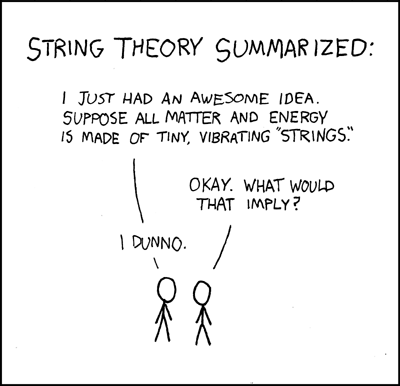
But was it true? By today's standards? No. By today's standards he was a brutish, racially-centric oaf that couldn't see past his own inflated self image. By today's standards he was wrong, his truth was false. Well, he might have been depending on who you talk to, but beyond that there have been a ton of other truths that have changed in the last hundred years. The fracturous state nations of Europe have become a single high functioning union, we split the atom, made up string theory, then tried to justify it, etc. Our knowledge of medicine, the human body, the sciences, concepts of tolerance/acceptance, we have grown and changed as a people, as a species. But the truths we're sitting on today are as transient and unsound as the truths the Greeks clung to, which gets us to the meat of my argument.

In one hundred years we won't recognize our world. The advances we've seen in the last hundred years alone have easily outpaced the grandest achievements of the last thousand. I don't see why that would slow down. Knowledge begets knowledge. Growth and change are cumulative. So in one hundred, two hundred, five hundred years surely we'll see our understanding of the universe around us stood on it's head (at least on it's side), made to weep as it's arms are folded behind itself and it's forced to the ground. With it's head bagged and it's hand's cuffed, our present day will be taken to a facility in another country and tortured for truths that we simply don't have the technology to employ in the present day and age. Advanced water boarding for archaeologists my friend. They will simultaneously know more about ourselves then we ever did, and be baffled by the simplest of things we understand intimately (remember more and less obscure?), and when the day ends it will be their truth, and it will overwrite ours.

Again, thanks to the nature of time and history our truth is transient. Something that will be unmade and remolded by those who come after us, just as we have remolded the truth of the Greeks. Our truth will be proved false eventually, but does that make our truth, as we perceive it now, right now, does that make it wrong?

I don't believe so.

It's our truth. We've experienced it. Just as personal truth and understanding of the world varies from individual so it does from era to era, but just as individual truths are real from person to person, so it is equally true for the era that experienced it. Their truth is just as real and valid as ours. They didn't experience a world only half understood, with limited and faulty knowledge. Boy their knowledge was cutting edge! They KNEW that their mighty creator king was on his mountain with his vengeful, oft-cuckolded wife watching his every move, trying to keep him from his night out on the bull... swan... thing. They KNEW! Just as we know now that the atom is the smallest particle in a calcium molecule, and if you mess that up you better run as fast as your legs can carry you (which will never be fast enough. Ever). Just as the future knows things about us we can't see beyond the edge of our horizons with their tri-optic eyes and super sciences.

Like Alexander Leek said in the Mothman Prophecies 'If there was a car crash ten blocks away, that window washer up there could probably see it. Now, that doesn't mean he's God, or even smarter than we are. But from where he's sitting, he can see a little further down the road.'

We're experiencing mythology every second of every day. The truth of now becomes the quaint (sometimes pagan, sometimes heretical) ideas of yesterday. Something to be looked upon amusement, while used to make those of us lucky enough to live in the 'modern' era feel great about how superior we are. Well I don't buy into that. I think the truths of yesterday are just as potent, still possibly just as alive as our truths will be as the future of man chuckles over it as he picks through our graves. What if Zeus is still on his mountain? sitting back on his throne, picking golden lint out of his divine belly button while wondering why chicks aren't into the bull thing anymore?

Wondering where his truth went?